Showing posts with label Uganda. Show all posts
Showing posts with label Uganda. Show all posts
Thursday, March 8, 2012
Some thoughts on the Kony 2012 campaign
My biggest problem with the "Stop Kony 2012" video is that it paints this picture of Uganda, the region, and the situation with this one-dimensional brush that fails to tell the whole story and leaves the viewer (and the future advocate) sorely misinformed. Yes, it's hard to explain the whole story and all the players involved in a simple You Tube video, but I think they have a responsibility (if they trying to be the voice of the problem to the rest of the world) to leave people a little more informed.
I think it's great that people are starting to notice and become more aware of Kony and the LRA, but the situation, both politically and logistically, in Uganda, Sudan and the Congo is more complex than the video leads people to believe.
If someone is hiding out in the DRC (or South Sudan, or the Central African Republic - because nobody really knows where exactly and what country exactly he is in) and they don't want to be found, it is going to take a lot more than this to find and capture him. Despite how crazy he seems, Kony is smart and has had over two decades to hone his skills. He is hiding (or so we believe) in an area that houses the borders of 4 different countries and uses violence and intimidation to force villages and people to cooperate with him and to hide his movements. Not only that, but the terrain is unbelievably hard and unforgiving and does more to hide Kony than to find him.
Some facts that people may not know:
(i) The situation today in Northern Uganda and in Gulu Town (which Invisible Children highlighted in their video) is drastically different than it was when they first began their campaign. Gulu Town today is more “Aid Relief Central” with much of that focusing on post-LRA issues. And while that’s certainly needed, there are other, often more significant problems facing the community. Now, Gulu has the highest rate of child prostitutes in Uganda and also one of the highest HIV/AIDS rates. There is also malaria, people dying of simple, preventable diarrhea and mothers dying in childbirth when, if given even the most basic of pre- and post-natal care, they should live.
(ii) The Ugandan army pushed the LRA out of Uganda and has kept them out for the past 6 years. There have been multiple military attempts at capture in the past and all have failed. In fact, the U.S. Africa Command (AFRICOM) has had a number of soldiers deployed in the area to assist the Ugandan army for years. In 2008, AFRICOM was even involved in a military push to take out the LRA once and for all. All efforts thus far, including AFRICOM’s 2008 effort code named Operation Lightning Thunder, have failed.
I have a hard time believing that signing a pledge, buying an action kit (with bracelets!) for $30, and signing up to donate will do much to actually help the fighting on the ground. The film's goal of raising awareness so that President Obama and Congress doesn't pull funding and thus troops from the region is misleading as well. In a recent interview with reporters from all over Africa (the interview can be found in the newspaper The Daily Monitor), Deputy Assistant Secretary of State for African Affairs Karl Wycoff said that the effort is "part of a comprehensive and long term strategy." At this point, there is nothing to indicate that the United States has any plans to cancel the effort.
While I applaud and support any effort to stop Kony, I have to wonder, when Kony either drops dead or is captured and executed, what will happen to all these people calling out to help Uganda? There are more problems in Uganda than just Kony (who isn't even in Uganda anymore). Debilitating poverty, a serious joke of a democracy, Museveni clinging to power at any cost (25 years and running strong!), rampant corruption at all levels of the government and education system, easily preventable diseases killing scores of people every day, and widespread human rights abuses are just some of the problems that Uganda will continue to face long after the goals of many aid agencies have been completed. Will they stay to help, or will they abandon the country that they so claim to want to protect?
Bad development work is based on the idea that poor people have nothing. Something is better than nothing, right? So anything you give these poor people will be better than what they had before. But that idea, that poor people have “nothing” is inherently false and moreover often damaging to those they are trying to help. Poor people don’t have nothing; they have ideas, skills that one may not recognize or appreciate, they have drive and knowledge of the situation that far exceeds your often myopic view. Good development work is often rooted in how we can help individuals help themselves. It’s training and brainstorming and a cooperative effort. It’s not “let me give you these things” without thinking of what happens when you leave. I’ve seen too many short-term volunteers who come and spend two weeks or four weeks building schools or wells without considering what happens after. They fail to train people to fix the wells when they inevitably break. They don’t take into consideration that schools have to be staffed and supplied.
It seems a little arrogant and naive to think that by buying a bracelet and updating your facebook status a bunch of people can do in nine months what the Ugandan, DRC, South Sudan and Central African Republic armies have been fighting to do for the last 25 years. Once again, the White Man swoops in to save the poor, defenseless Africans. I'd like to see IC highlight local, grassroots efforts that Ugandans have done themselves. Ugandans have done a lot of rebuilding, vocational training, and support of the Acholi people and it pains me that IC does nothing to highlight the good work of local Ugandans. Everything I've seen from them seems to ignore the great strides that Ugandans have done to rebuild themselves. Let's also try to celebrate that.
But that's just my opinion.

Saturday, September 25, 2010
First Comes Love...
In America, marriage options for a couple in love are simple. First: get engaged, second: get married, either at a church or city hall. Party, optional (but preferred, I mean, come on, who doesn't love a party?)
In Uganda, things go a little differently. In the Buganda kingdom, where I currently live, the act of getting married is a little more complicated. First you have to find a willing participant. As a Muzungu (white), this is surprisingly easy. I've had more marriage proposals from complete strangers than I wish to count. Boda drivers, shop owners, farmers, primary school boys, homeless people, all request the honor of my hand in marriage. Or more accurately it's: "Muzungu! You marry me! We go to America! We play sex! Yes?!" Oh. I'm so honored. I can barely contain myself. I've never been wooed in such a pleasing fashion before!
Once you've found the right partner, then the fun begins. First you negotiate. The groom visits the bride's family and negotiates the traditional "bride price." In many parts of Uganda, the bride price is alive and kicking. Especially in the eastern Karamojong region, the amount the of bride price is very important. Families want to get as much cattle and other goods as they can for their daughters. It's a status thing. The more cattle you can garner, the more prestigious you are. In the Buganda region, bride price is more of a traditional aspect of marriage. The amount of cattle or other goods you bring doesn't really relate to the quality of the girl. Ideally, a groom should bring some cattle to the table, but it's not a deal breaker like it would be in other regions. Here is an essay that goes more into the cultural reasons and matrimonial implications of bride price.
Following the negotiation for the bride price comes the introduction ceremony. For more rural populations, a couple is considered officially married following the introduction ceremony. After the introduction, the couple spends a few days apart and then begins to make a life together and producing children. An introduction ceremony is part drama, part serious marriage ceremony. It's intended to be a lighthearted event, with dancing, music, and good food. While the groom's side shows off its wealth in the form of the bride price, the bride's family is also concerned with appearing as wealthy and well to do as possible. I believe this is partly to do with showing up their neighbors and partly to do with wanting the groom to think he's getting the best deal possible by marrying their daughter. During the first half of the introduction, the bride's female family members (sisters, aunties, nieces, etc) dance out and give little speeches and receive small gifts. During all of this, the groom is "hidden" in the back with his guests and the bride's family searches through the crowed to find him. Once they have found the groom, they bring him to the front, tie a sash on him and only then does the bride make her appearance.
Unlike in America, where the bride usually "glows" with happiness on the big day, in Uganda, like many other cultures around the world, the bride is required to look sad, never letting a smile appear or any hint of happiness. She is sad to leave her family, and should appear as such. She sits, quietly, looking down, sadness on her face. She does not speak until the very end and only sits with the groom briefly before leaving again. Gertrude, however, could not seem to keep her face in sadness; small smiles flashed across her face and you could just feel her happiness and pleasure.
After the bride's family had introduced all its members and fed and watered the groom's side, the time comes for the bride price to be presented. The groom's side all participates in this with the women carrying baskets on their heads, someone bringing in a stick to symbolize the cattle, and all the gifts are arranged before the bride's family. Traditionally, the groom presents his bride with a suitcase filled with clothing and other necessities she will need to start her new life with him. Another traditional gift is that of gomez fabric and konzus to each of the bride's immediate relatives.
After the gifts are presented, the real party begins. Food, music and dancing. The bride's family feeds all of the guests, which is an other opportunity to showcase their wealth. The previous day, David slaughtered one of the cows he purchased for the bride price (or had slaughtered). This was then delivered to the bride's family and I suspect made its way into our post-introduction meal. Typically, the bride's family stays the entire night and parties while the groom's side returns back to their hotel or homes to celebrate on their own.
After the introduction, more affluent families, or more urban (and thus, western) families will also choose to perform a western marriage ceremony in a church setting. In Uganda, however, not all marriages performed in churches are legal. Only a certain number of church types can perform legal marriages. If a couple chooses to have a church marriage, they will also then have a marriage performed by a justice of the peace to make it legal.
And now, some pictures:
 The girls lined up ready to enter the introduction in our gomezi! Looking good!
 Before we were allowed to enter the introduction, we were "immunized" by several nurses. Our "immunization" consisted of them pinning knitted or crocheted green and white flowers on our clothes.
 Some of the bride's family being introduced.
 More of the bride's family being introduced. There were probably 5 or 6 groups of women who all danced out and then knelt before the groom's side. In the Buganda culture, women kneel when greeting or speaking to men or elders.
 The bride's side.
 About midway through the introductions, the bride's grandmothers (or jaja) burst into the ceremony in their digging clothes (the one in the front is wearing a digging gomez) and insisted on knowing why they "weren't invited to the ceremony!" They were invited; this was part of the "drama" of the evening.
 The bride's family fed the groom's family sodas, meet samosas, a boiled irish potato and a chapati during the ceremony.

 They found him! Bringing the groom to the front after finding him in the crowd.
 Putting the sash on the groom. It's made of barkcloth, a traditional Buganda cloth.
 Presenting the bride's family with a crate of soda.
 The bride, outfit number one, looking mournful.
 The "bride price."
 Cutting the cake (with flares?). The groom didn't cut the cake with the bride, it was all her side of the family!
 The bride serving cake to the groom and his "sister"
In Uganda, things go a little differently. In the Buganda kingdom, where I currently live, the act of getting married is a little more complicated. First you have to find a willing participant. As a Muzungu (white), this is surprisingly easy. I've had more marriage proposals from complete strangers than I wish to count. Boda drivers, shop owners, farmers, primary school boys, homeless people, all request the honor of my hand in marriage. Or more accurately it's: "Muzungu! You marry me! We go to America! We play sex! Yes?!" Oh. I'm so honored. I can barely contain myself. I've never been wooed in such a pleasing fashion before!
Once you've found the right partner, then the fun begins. First you negotiate. The groom visits the bride's family and negotiates the traditional "bride price." In many parts of Uganda, the bride price is alive and kicking. Especially in the eastern Karamojong region, the amount the of bride price is very important. Families want to get as much cattle and other goods as they can for their daughters. It's a status thing. The more cattle you can garner, the more prestigious you are. In the Buganda region, bride price is more of a traditional aspect of marriage. The amount of cattle or other goods you bring doesn't really relate to the quality of the girl. Ideally, a groom should bring some cattle to the table, but it's not a deal breaker like it would be in other regions. Here is an essay that goes more into the cultural reasons and matrimonial implications of bride price.
Following the negotiation for the bride price comes the introduction ceremony. For more rural populations, a couple is considered officially married following the introduction ceremony. After the introduction, the couple spends a few days apart and then begins to make a life together and producing children. An introduction ceremony is part drama, part serious marriage ceremony. It's intended to be a lighthearted event, with dancing, music, and good food. While the groom's side shows off its wealth in the form of the bride price, the bride's family is also concerned with appearing as wealthy and well to do as possible. I believe this is partly to do with showing up their neighbors and partly to do with wanting the groom to think he's getting the best deal possible by marrying their daughter. During the first half of the introduction, the bride's female family members (sisters, aunties, nieces, etc) dance out and give little speeches and receive small gifts. During all of this, the groom is "hidden" in the back with his guests and the bride's family searches through the crowed to find him. Once they have found the groom, they bring him to the front, tie a sash on him and only then does the bride make her appearance.
Unlike in America, where the bride usually "glows" with happiness on the big day, in Uganda, like many other cultures around the world, the bride is required to look sad, never letting a smile appear or any hint of happiness. She is sad to leave her family, and should appear as such. She sits, quietly, looking down, sadness on her face. She does not speak until the very end and only sits with the groom briefly before leaving again. Gertrude, however, could not seem to keep her face in sadness; small smiles flashed across her face and you could just feel her happiness and pleasure.
After the bride's family had introduced all its members and fed and watered the groom's side, the time comes for the bride price to be presented. The groom's side all participates in this with the women carrying baskets on their heads, someone bringing in a stick to symbolize the cattle, and all the gifts are arranged before the bride's family. Traditionally, the groom presents his bride with a suitcase filled with clothing and other necessities she will need to start her new life with him. Another traditional gift is that of gomez fabric and konzus to each of the bride's immediate relatives.


After the gifts are presented, the real party begins. Food, music and dancing. The bride's family feeds all of the guests, which is an other opportunity to showcase their wealth. The previous day, David slaughtered one of the cows he purchased for the bride price (or had slaughtered). This was then delivered to the bride's family and I suspect made its way into our post-introduction meal. Typically, the bride's family stays the entire night and parties while the groom's side returns back to their hotel or homes to celebrate on their own.
After the introduction, more affluent families, or more urban (and thus, western) families will also choose to perform a western marriage ceremony in a church setting. In Uganda, however, not all marriages performed in churches are legal. Only a certain number of church types can perform legal marriages. If a couple chooses to have a church marriage, they will also then have a marriage performed by a justice of the peace to make it legal.
And now, some pictures:
 The girls lined up ready to enter the introduction in our gomezi! Looking good!
 Before we were allowed to enter the introduction, we were "immunized" by several nurses. Our "immunization" consisted of them pinning knitted or crocheted green and white flowers on our clothes.
 Some of the bride's family being introduced.
 More of the bride's family being introduced. There were probably 5 or 6 groups of women who all danced out and then knelt before the groom's side. In the Buganda culture, women kneel when greeting or speaking to men or elders.
 The bride's side.
 About midway through the introductions, the bride's grandmothers (or jaja) burst into the ceremony in their digging clothes (the one in the front is wearing a digging gomez) and insisted on knowing why they "weren't invited to the ceremony!" They were invited; this was part of the "drama" of the evening.
 The bride's family fed the groom's family sodas, meet samosas, a boiled irish potato and a chapati during the ceremony.
 They found him! Bringing the groom to the front after finding him in the crowd.
 Putting the sash on the groom. It's made of barkcloth, a traditional Buganda cloth.
 Presenting the bride's family with a crate of soda.
 The bride, outfit number one, looking mournful.
 The "bride price."
 Cutting the cake (with flares?). The groom didn't cut the cake with the bride, it was all her side of the family!
 The bride serving cake to the groom and his "sister"
Saturday, August 28, 2010
Election Season
There is a park (I say park, what I really mean is that there is a patch of undeveloped land that people lounge about on during the middle of the day) near my house that has recently become a hub of election campaigning. Several days ago, while walking home from town, I noticed a cluster of individuals sitting quietly beneath group of trees. Strange, I thought. That so many people would be sitting so quietly and peacefully in this little park. Usually the park is filled with young boys or youths playing football, or sugar cane vendors shouting for customers (or at the muzungu). But there they sat. Quietly in conversation. The next day I figured out why. They had returned, but this time were all wearing bright yellow shirts and now included a number of bodaboda drivers, also wearing bright yellow shirts, and a few had strapped large megaphones to the backs of their bodas. The trees were papered with yellow campaign fliers. Later that evening the bodas took off blasting music and grainy campaign messages all over town from their over-sized megaphones.
These days, I hear the sounds of campaigning everywhere in town. I hear music blasted from cars and bodas as I lay in bed attempting sleep, I hear garbled campaigning shouted through megaphones as I walk the streets and shop in the markets. Every available surface is wallpapered in various campaign fliers; prospective mayors and women MPs smile down at me from every available surface - walls, windows, trees, fences, garage doors. Young boys in matching t-shirts hand out fliers on the streets and the local Democratic Party office always has its doors wide open, animated discussing escaping into the street.
There are also however more serious signs of next year's impeding elections. I've observed many more of the private security firms (who I don't believe to be officially associated with the Ugandan military) conducting drills and marches and various military-style exercises. It's actually quite amusing to see grown men in uniforms and carrying rifles (next year it'll be strange to again live in a country where seeing a man walking down the street with a riffle is not the norm and is certainly a cause for concern) struggling to understand exactly how to march in two single file lines for X amount of steps, turn in unison and march back. Pure hilarity. Even the children abstain from gawking at me and my fellow "muzungus" to stare unabashedly at the security men practicing their marches.
As of now there's not much evidence that the country will go south before, during or after the elections next February. We will probably be on "standfast" at least, meaning we can't leave our sites. There's little doubt in many of our minds that Museveni, the current president, will win his bid for reelection. Ugandans are, for the majority, of the same mind - very few of them think he will lose reelection either. It'll certainly be interesting no matter what happens!
These days, I hear the sounds of campaigning everywhere in town. I hear music blasted from cars and bodas as I lay in bed attempting sleep, I hear garbled campaigning shouted through megaphones as I walk the streets and shop in the markets. Every available surface is wallpapered in various campaign fliers; prospective mayors and women MPs smile down at me from every available surface - walls, windows, trees, fences, garage doors. Young boys in matching t-shirts hand out fliers on the streets and the local Democratic Party office always has its doors wide open, animated discussing escaping into the street.
There are also however more serious signs of next year's impeding elections. I've observed many more of the private security firms (who I don't believe to be officially associated with the Ugandan military) conducting drills and marches and various military-style exercises. It's actually quite amusing to see grown men in uniforms and carrying rifles (next year it'll be strange to again live in a country where seeing a man walking down the street with a riffle is not the norm and is certainly a cause for concern) struggling to understand exactly how to march in two single file lines for X amount of steps, turn in unison and march back. Pure hilarity. Even the children abstain from gawking at me and my fellow "muzungus" to stare unabashedly at the security men practicing their marches.
As of now there's not much evidence that the country will go south before, during or after the elections next February. We will probably be on "standfast" at least, meaning we can't leave our sites. There's little doubt in many of our minds that Museveni, the current president, will win his bid for reelection. Ugandans are, for the majority, of the same mind - very few of them think he will lose reelection either. It'll certainly be interesting no matter what happens!
Wednesday, August 4, 2010
Eye Glasses Clinic
A few months ago I took a few days to do some work for a Danish organization here in town. They had received a shipment of donated eye glasses from Denmark and needed some help organizing them. I went through all 3,000 or so glasses and organized them into their own little boxes by prescription strength. I knew they would be distributed in the village at some point, but since that day failed to come....I forgot about it. To my surprise, an American friend and Child Care worker, Fay, contacted me last week to let me know that the clinic was scheduled for the weekend and would I like to help out? Of course!
I left the project early on Saturday and met Fay at her office. We left together for the village church where the clinic was to take place. Since this is Uganda, we were late. But not really...since you're not "on time" here unless you're late. We set up in the church office and a trickle of people came in throughout the afternoon to get their eyes tested and receive their brand new glasses. Most of the people had problems with reading close up, but a couple needed help with seeing things far away. Most of the villagers who came were women, but a few were men and we had a couple children who had problems reading the board at school.
Since my writing skills seem to be going downhill fast, here's some pictures:


And baby David, who was thrown down a pit latrine when he was just a new born. He was rescued and is now being raised by the same organization. He's now four months old, laughing, crazy ticklish, making all sorts of noises, and wearing 12-month-old size clothes.

I left the project early on Saturday and met Fay at her office. We left together for the village church where the clinic was to take place. Since this is Uganda, we were late. But not really...since you're not "on time" here unless you're late. We set up in the church office and a trickle of people came in throughout the afternoon to get their eyes tested and receive their brand new glasses. Most of the people had problems with reading close up, but a couple needed help with seeing things far away. Most of the villagers who came were women, but a few were men and we had a couple children who had problems reading the board at school.
Since my writing skills seem to be going downhill fast, here's some pictures:


And baby David, who was thrown down a pit latrine when he was just a new born. He was rescued and is now being raised by the same organization. He's now four months old, laughing, crazy ticklish, making all sorts of noises, and wearing 12-month-old size clothes.

Saturday, May 29, 2010
To future Peace Corps Uganda trainees
When I was preparing to come to Uganda, I scoured the interwebs for packing-related posts. I wanted to know how closely I should follow the packing list Peace Corps provides and what things that I should bring were left off the list. I remember how I soaked up every bit of information I could find, so in this post I've created a "little" list for you future trainees. It's not comprehensive and you should, by no means, bring everything on the list (you don't have the weight allowance for it!), but it's a start. I used the official Peace Corps packing list as my guide and went from there. I hope it's useful!
CLOTHING
I cannot emphasize enough how important it is to bring clothes you LIKE. I went more for comfort than fashion, and while comfort is important, I wish I had brought more cute clothes with me.
Rain jacket - don't really need to bring one. But if you do, make it light weight! I brought one, but it's too warm to use so I just use an umbrella most times. During the rainy season it's usually raining really hard and you're not going to want to go outside anyway. You really only need an umbrella for when it's just sprinkling.
Sleepwear - bring a few pairs. The yoga pants (longer, ankle-length) are nice for lounging too. Bring tanks for sleeping in or some light-weight ts.
Long-sleeved shirts aren't really necessary. Just bring a lightweight jacket (like a sweat suit-ish zip-up jacket). There’s only one part of the country that gets cold enough for a long-sleeved shirt, and that’s in the south.
Skirts - bring at least 4. I’d recommend against long, ankle-length skirts. You might want to bring one, and that’s ok. The days here do get warm and long skirts don’t allow much air movement! You can get skirts made here, but you're probably not going to in training. And it's no fun to wear the same three all freaking week.
Gouchos are your friend. Invest. Also maybe some black leggings to wear under stuff.
When the packing list talks about tops it's a bit vague. Bring cute ones. Stuff you wear in the States will work fine. I made the mistake of bringing plain short sleeve shirts and I really regret it.
Tank-tops. Bring them. They, like gouchos, are your friend. Just be warned that the ribbed ones (like they sell at Old Navy) will stretch like none other. Try to find some that aren't ribbed.
Dresses can be a nice alternative to skirts. You might bring one for swearing in (although several girls got dresses made for that) and one more "casual" dress. This one can be tank-topy, but bring a shawl or cardigan to cover up with. Some places it’s perfectly fine to show your shoulders, but other sites are more conservative.
Speaking of shawls, they're awesome. I wish I had brought one or two with me. I bought one here, but they're nice to keep in your backpack during training for when it starts to rain and the cold wind blows in through the window.
Ignore what the Peace Corps packing list says about jeans. yes they're kind of hard to wash, but you don't really want to bring slacks. Bring at least one pair of jeans and you'll be fine. Also you might want to consider bringing a pair of Bermuda shorts (the ones to the knees).
Underwear/Bras - Bring lots. I'm talking like 30 or 40 pairs. Set aside half for mid-service or some later date. Handwashing will really wear down your undies (like everything else). Bring nice ones. I brought Victoria's Secret (the 5 for $25 ones so they were fairly inexpensive) and I've been happy. Same goes for bras. Bring several nice pairs. The stuff they sell here is NOT as good as the kinds you find in the States.
Bring a couple pairs of socks. Dark colors, certainly not white. You don't need many, but sometimes it's nice to wear socks around the house. Ugandans have cement floors and they can get a little cold/hard sometimes. Also if you’re a runner, you’ll want to bring socks…but if you’re a runner, you probably already knew that!
Sports bra - I’m not a runner so I didn’t have any need to bring one, but if you run, you might think about it.
Slip - bring one if your skirts can be see through. I brought skirts that have liners built in and have never worn the slip I brought. Save your money.
Shoes - Tennis shoes are nice if you hike or are going to go running, otherwise I wouldn't bring them. Tevas/Keens/etc are awesome. Bring cute ones. Flip flops are a plus too. I'd also suggest Crocs ballet slippers I have them in black. I love mine and they're super easy to clean!
Belt - bring one if you're bringing jeans or any type of pants that requires one.
Cap/Hat/gardening gloves - you can leave those at home.
TOILETRIES
BRING TAMPONS. Peace Corps will not provide and they can be somewhat
expensive here. Or, alternatively, bring a Diva Cup. But practice with it before.
BRING FACEWASH. Impossible to find and when you do it's like 8 bucks
for a tiny little thing.
You can bring hand sanitizer if you like. It's pretty expensive to buy in Kampala. I don't really use mine...ever.
BRING NAIL POLISH. Your toes will want to look pretty.
Don't worry about make up. Bring a small supply for going out and swearing-in. I used to wear it all the time in the States – never went out without some make up on and now I rarely ever wear it. Besides, you'll get tan and the shade you'll bring won't match anymore.
I'd also bring nail clippers, etc and razors. The ones here aren't as good.
KITCHEN
Bring knives. Bring several. You won't regret it. If you drink coffee, bring a french press.
Can opener is a plus too, also measuring things. I found great measuring spoons and such at Bed/Bath/Beyond before I left - there's also one for liquids that's awesome.
Bring hot pads…they're not available here....weird.
Ziplock bags. YES!
Knife sharpener is a good investment too. The knives here suck and you'll need to sharpen!
You don't really need to bring spatulas, etc or tupperwear. You can find them here.
BEDDING/TOWELS
Bring a large camp towel. I also found a narrow, long one (it's yellow) at walmart that I cut in half to make two wash cloths.
Flat sheets are good since you don't know what size bed you'll eventually have. You'll be given a twin-ish sized one during training. Also bring a plastic mattress liner. Some mattresses will have bed bugs. I'd bring a pillow (just put it in one of those vaccum bags and make it flat for packing).
Also a small camping sleeping bag can be nice if you have the room for staying over at friend’s house.
ELECTRONICS
Alarm clock - no need. You'll get a cell phone here and you can use that instead.
head lamp - YES! Bring extra rechargable batteries for it too. it's useful for the latrines!
flashlight - no need. You can find one here and your phone (if you buy one in country has one built in).
Watch - yes. If you wear one in the states, bring one with you.
Shortwave Radio - you can find one here. However if someone gives you one as a gift, bring it.
iPod - MUST! with lots of songs!
Small speakers - YES! There's this cute little round one that looks like a little tuna can that's awesome.
Camera with batteries - YES! bring one that will take AA batteries if possible. You should also bring lots of memory cards
Solios are nice, however I haven't used mine yet, but I have pretty good access to power. You might not.
LOTS of rechargeable batteries! (and battery charger!)
A flash drive is nice...you should bring one if you have one already.
Don't bring blank CDs. Not even sure why it's on the Peace Corps packing list.
If you bring your laptop, you need to bring an external harddrive. They're good for backing up your computer and you'll want to steal movies/tv shows/music from people.
speaking of laptops...you should bring one. There's no one I've met here who has regretted bringing one.
I'm not sure if you should buy the voltage converter here in Uganda or in the US...but you can get the plug adapter here. I got one in Kampala for 3.50$. Way cheaper than in the States!
MISCELLANEOUS
The food section of the Peace Corps packing list is best saved for packages from home. Although I would bring a supply of Cliff/Luna/etc bars and some powdered drink mix. I really like the K2O protein mix in pink lemonade :P
Bringing cash is fine, but make sure it's in 50s or 100s AFTER 2004.You'll get a MUCH better exchange rate here. You will need to bring about 50$ for a cellphone if you don’t’ unlock yours before you get to Uganda. Peace Corps requires you to purchase a cell phone, but doesn’t give you the money for it.
If you bring a credit card, make sure your bank knows you'll be in Uganda for the time and request that they don't authorize any purchase unless you notify them before hand.
Bring at least 8 passport size pics. You'll need them for Peace Corps stuff and for opening a post office box in town.
You don't really need to bring a dictionary or reference books unless you can't live without them. Use that space for more important stuff...like novels!
You can find old (2004, 2008, etc) GRE and LSAT prep books in the Peace Corps office. Don’t bring one unless you absolutely have to.
Duct tape is your friend. bring it.
A calendar is nice, but it’s easy to make your own out of paper when you get here. An appointment book could possibly be useful, but don’t waste the space if you don’t think you’ll ever use it.
Journals are nice if you like journaling
Good scissors are a plus too!
Scotch tape is another thing I wish I brought, somehow it didn't make it in the bag!
Also bring Aloe Vera gel if you burn. DO IT.
There’s no need to bring envelopes or US stamps. Letters back home take about 2 weeks and are only 2,000 shillings to mail. Envelopes are widely available here.
bring at least two Nalgene bottles. You'll inevitably lose one. I lost one before I even left Philly! Left it in my sister's car when she drove me to the Hotel!
Sunglasses are a good thing to bring
You don't need to bring a money belt or Binoculars.
Bungee cords are nice, bring several sizes.
Some sort of day pack is a good thing to bring. I brought a regular backpack (school type) for training. you'll want something to carry your training stuff in and for short trips.
Luggage locks - YES. Bring at least enough to lock up all your luggage on the plane and make sure you have some for your backpack for walking around Kampala. There are thieves in Kampala who WILL try to unzip your bags, especially in and around the taxi parks. I always put luggage locks on my zippers when I go into Kampala.
Zip ties - no need. Not sure why this is on the Peace Corps packing list...
Instrument - if you play, bring it. especially guitar. They're expensive here and if you already have one, bring it!
Hobby stuff, novels, pictures, earrings/jewelry are all pluses
Seeds are good to bring. You can find a lot of stuff here, but if there's something you really want (like various lettuces, or really lettuce at all – Ugandans don’t eat lettuce! etc), you should bring it.
Good map of Uganda is nice too. Also a map of the world!
The Bradt guide is nice, but you can access a lot of stuff online. I haven't used mine, but you never know....
You don't really need to bring sports equipment, but if you want to, don't worry about it. Bring what makes you happy. A Frisbee is always nice.
Cards and card games are also nice to have!
CLOTHING
I cannot emphasize enough how important it is to bring clothes you LIKE. I went more for comfort than fashion, and while comfort is important, I wish I had brought more cute clothes with me.
Rain jacket - don't really need to bring one. But if you do, make it light weight! I brought one, but it's too warm to use so I just use an umbrella most times. During the rainy season it's usually raining really hard and you're not going to want to go outside anyway. You really only need an umbrella for when it's just sprinkling.
Sleepwear - bring a few pairs. The yoga pants (longer, ankle-length) are nice for lounging too. Bring tanks for sleeping in or some light-weight ts.
Long-sleeved shirts aren't really necessary. Just bring a lightweight jacket (like a sweat suit-ish zip-up jacket). There’s only one part of the country that gets cold enough for a long-sleeved shirt, and that’s in the south.
Skirts - bring at least 4. I’d recommend against long, ankle-length skirts. You might want to bring one, and that’s ok. The days here do get warm and long skirts don’t allow much air movement! You can get skirts made here, but you're probably not going to in training. And it's no fun to wear the same three all freaking week.
Gouchos are your friend. Invest. Also maybe some black leggings to wear under stuff.
When the packing list talks about tops it's a bit vague. Bring cute ones. Stuff you wear in the States will work fine. I made the mistake of bringing plain short sleeve shirts and I really regret it.
Tank-tops. Bring them. They, like gouchos, are your friend. Just be warned that the ribbed ones (like they sell at Old Navy) will stretch like none other. Try to find some that aren't ribbed.
Dresses can be a nice alternative to skirts. You might bring one for swearing in (although several girls got dresses made for that) and one more "casual" dress. This one can be tank-topy, but bring a shawl or cardigan to cover up with. Some places it’s perfectly fine to show your shoulders, but other sites are more conservative.
Speaking of shawls, they're awesome. I wish I had brought one or two with me. I bought one here, but they're nice to keep in your backpack during training for when it starts to rain and the cold wind blows in through the window.
Ignore what the Peace Corps packing list says about jeans. yes they're kind of hard to wash, but you don't really want to bring slacks. Bring at least one pair of jeans and you'll be fine. Also you might want to consider bringing a pair of Bermuda shorts (the ones to the knees).
Underwear/Bras - Bring lots. I'm talking like 30 or 40 pairs. Set aside half for mid-service or some later date. Handwashing will really wear down your undies (like everything else). Bring nice ones. I brought Victoria's Secret (the 5 for $25 ones so they were fairly inexpensive) and I've been happy. Same goes for bras. Bring several nice pairs. The stuff they sell here is NOT as good as the kinds you find in the States.
Bring a couple pairs of socks. Dark colors, certainly not white. You don't need many, but sometimes it's nice to wear socks around the house. Ugandans have cement floors and they can get a little cold/hard sometimes. Also if you’re a runner, you’ll want to bring socks…but if you’re a runner, you probably already knew that!
Sports bra - I’m not a runner so I didn’t have any need to bring one, but if you run, you might think about it.
Slip - bring one if your skirts can be see through. I brought skirts that have liners built in and have never worn the slip I brought. Save your money.
Shoes - Tennis shoes are nice if you hike or are going to go running, otherwise I wouldn't bring them. Tevas/Keens/etc are awesome. Bring cute ones. Flip flops are a plus too. I'd also suggest Crocs ballet slippers I have them in black. I love mine and they're super easy to clean!
Belt - bring one if you're bringing jeans or any type of pants that requires one.
Cap/Hat/gardening gloves - you can leave those at home.
TOILETRIES
BRING TAMPONS. Peace Corps will not provide and they can be somewhat
expensive here. Or, alternatively, bring a Diva Cup. But practice with it before.
BRING FACEWASH. Impossible to find and when you do it's like 8 bucks
for a tiny little thing.
You can bring hand sanitizer if you like. It's pretty expensive to buy in Kampala. I don't really use mine...ever.
BRING NAIL POLISH. Your toes will want to look pretty.
Don't worry about make up. Bring a small supply for going out and swearing-in. I used to wear it all the time in the States – never went out without some make up on and now I rarely ever wear it. Besides, you'll get tan and the shade you'll bring won't match anymore.
I'd also bring nail clippers, etc and razors. The ones here aren't as good.
KITCHEN
Bring knives. Bring several. You won't regret it. If you drink coffee, bring a french press.
Can opener is a plus too, also measuring things. I found great measuring spoons and such at Bed/Bath/Beyond before I left - there's also one for liquids that's awesome.
Bring hot pads…they're not available here....weird.
Ziplock bags. YES!
Knife sharpener is a good investment too. The knives here suck and you'll need to sharpen!
You don't really need to bring spatulas, etc or tupperwear. You can find them here.
BEDDING/TOWELS
Bring a large camp towel. I also found a narrow, long one (it's yellow) at walmart that I cut in half to make two wash cloths.
Flat sheets are good since you don't know what size bed you'll eventually have. You'll be given a twin-ish sized one during training. Also bring a plastic mattress liner. Some mattresses will have bed bugs. I'd bring a pillow (just put it in one of those vaccum bags and make it flat for packing).
Also a small camping sleeping bag can be nice if you have the room for staying over at friend’s house.
ELECTRONICS
Alarm clock - no need. You'll get a cell phone here and you can use that instead.
head lamp - YES! Bring extra rechargable batteries for it too. it's useful for the latrines!
flashlight - no need. You can find one here and your phone (if you buy one in country has one built in).
Watch - yes. If you wear one in the states, bring one with you.
Shortwave Radio - you can find one here. However if someone gives you one as a gift, bring it.
iPod - MUST! with lots of songs!
Small speakers - YES! There's this cute little round one that looks like a little tuna can that's awesome.
Camera with batteries - YES! bring one that will take AA batteries if possible. You should also bring lots of memory cards
Solios are nice, however I haven't used mine yet, but I have pretty good access to power. You might not.
LOTS of rechargeable batteries! (and battery charger!)
A flash drive is nice...you should bring one if you have one already.
Don't bring blank CDs. Not even sure why it's on the Peace Corps packing list.
If you bring your laptop, you need to bring an external harddrive. They're good for backing up your computer and you'll want to steal movies/tv shows/music from people.
speaking of laptops...you should bring one. There's no one I've met here who has regretted bringing one.
I'm not sure if you should buy the voltage converter here in Uganda or in the US...but you can get the plug adapter here. I got one in Kampala for 3.50$. Way cheaper than in the States!
MISCELLANEOUS
The food section of the Peace Corps packing list is best saved for packages from home. Although I would bring a supply of Cliff/Luna/etc bars and some powdered drink mix. I really like the K2O protein mix in pink lemonade :P
Bringing cash is fine, but make sure it's in 50s or 100s AFTER 2004.You'll get a MUCH better exchange rate here. You will need to bring about 50$ for a cellphone if you don’t’ unlock yours before you get to Uganda. Peace Corps requires you to purchase a cell phone, but doesn’t give you the money for it.
If you bring a credit card, make sure your bank knows you'll be in Uganda for the time and request that they don't authorize any purchase unless you notify them before hand.
Bring at least 8 passport size pics. You'll need them for Peace Corps stuff and for opening a post office box in town.
You don't really need to bring a dictionary or reference books unless you can't live without them. Use that space for more important stuff...like novels!
You can find old (2004, 2008, etc) GRE and LSAT prep books in the Peace Corps office. Don’t bring one unless you absolutely have to.
Duct tape is your friend. bring it.
A calendar is nice, but it’s easy to make your own out of paper when you get here. An appointment book could possibly be useful, but don’t waste the space if you don’t think you’ll ever use it.
Journals are nice if you like journaling
Good scissors are a plus too!
Scotch tape is another thing I wish I brought, somehow it didn't make it in the bag!
Also bring Aloe Vera gel if you burn. DO IT.
There’s no need to bring envelopes or US stamps. Letters back home take about 2 weeks and are only 2,000 shillings to mail. Envelopes are widely available here.
bring at least two Nalgene bottles. You'll inevitably lose one. I lost one before I even left Philly! Left it in my sister's car when she drove me to the Hotel!
Sunglasses are a good thing to bring
You don't need to bring a money belt or Binoculars.
Bungee cords are nice, bring several sizes.
Some sort of day pack is a good thing to bring. I brought a regular backpack (school type) for training. you'll want something to carry your training stuff in and for short trips.
Luggage locks - YES. Bring at least enough to lock up all your luggage on the plane and make sure you have some for your backpack for walking around Kampala. There are thieves in Kampala who WILL try to unzip your bags, especially in and around the taxi parks. I always put luggage locks on my zippers when I go into Kampala.
Zip ties - no need. Not sure why this is on the Peace Corps packing list...
Instrument - if you play, bring it. especially guitar. They're expensive here and if you already have one, bring it!
Hobby stuff, novels, pictures, earrings/jewelry are all pluses
Seeds are good to bring. You can find a lot of stuff here, but if there's something you really want (like various lettuces, or really lettuce at all – Ugandans don’t eat lettuce! etc), you should bring it.
Good map of Uganda is nice too. Also a map of the world!
The Bradt guide is nice, but you can access a lot of stuff online. I haven't used mine, but you never know....
You don't really need to bring sports equipment, but if you want to, don't worry about it. Bring what makes you happy. A Frisbee is always nice.
Cards and card games are also nice to have!
Saturday, May 22, 2010
New Roomie

My new best friend. He's cuddly. He's soft. He purrs like a maniac. Birdie.
*swoon*
I brought my new kitten home two days ago from Grace, a fellow volunteer's, site. Even though I'm slowly by slowly getting used to traveling in Uganda, it was still quite the experience.
I first boarded a coaster (smaller than a bus, larger than a matatu) at my site around 8:30am. Usually I show up around 9 and wait in the coaster for a half hour until it fills. It never fills up earlier than that, but for some reason, it was full very early. I was one of the last to arrive and therefore had to sit in one of the "jump seats," pull-down seats that sit in the aisle. I really do not like these seats. They are not as comfortable; the backs lean way back and you get quite the abdominal work out sitting back in one. Furthermore, since you're sitting in the aisle, you're sitting on people's luggage, sacks of food, etc, leaving you with little to no leg room and you're constantly getting up to let people exit the vehicle. My seat was on top of a large sack of matooke. My knees were to my chest and my backpack kept sliding off and bumping against the woman next to me. The kitten's basket that I purchased before I left was sitting on my lap. Not much room to move around!
The woman to my right had the cutest baby who kept running her fingers over the weave pattern on the basket, enchanted with the texture on her fingertips. Why is it that Ugandan babies are a million times cuter than most American babies? Sorry, America...Uganda's got you beat in the Baby Cuteness Contest!
While coasters and matatus usually stop several times during the journey to Kampala, letting passengers off and picking up new ones. This time, however, we only stopped once - to let a woman throw up. A shout came from the back of the bus; a man yelled to the conductor, the driver quickly pulled over and a young woman stumbled over people, bags of matooke, chickens to the door, and knelt in the grass. I felt bad for her. I knew how bad the roads are now that most of the road is torn up in construction. I took my Dramamine before the journey, she didn't.
For over half of the drive into the capital the road is dirt or gravel, the tarmac torn up in order to "improve" the roads. The rainy season is winding down and the dust and dirt on the roads is increasing. The dust chokes the breath out of you, scratches your corneas and coats your skin a lovely shade of reddish-brown. Women cover their heads with wraps, shawls, handkerchiefs, plastic bags - anything to keep their hair preserved. Men might hold a handkerchief to their noses, filtering out the dust, but otherwise they sit stoically, accepting their dusty fate. A fine dust permeates everything, sneaking into every crack and crevice. Even after several bucket baths, the water still turns russet.
We arrived in Kampala three hours later dusty, dirty and sweaty. Shannon, another Volunteer who had been taking care of Birdie for a few days until I could come pick him up, told me before I left that I could catch a matatu to Grace's site at either the New taxi park or the Old taxi park. However, after walking through the entire New taxi park, asking various vendors for the stage, dodging matatus, and squelching in mud, I realized that there wasn't a stage for Grace's site in the New taxi park; I would have to make the trek to the Old taxi park.
The two parks aren't very far apart, perhaps three or four blocks. But those are hectic, untamed three or four blocks. Special hire drivers grab at you, "where we go?" ; boda boda drivers cut you off in the street, weaving around matatus and pedestrians; vendors shout at you and hawk their goods in your face; the sidewalks are crowded with hundreds of vendors and shops, slowly walking Ugandans and boda bodas, refusing to use the streets. The streets themselves are muddy and bumper to bumper matatus near the taxi park entrances, and zooming with boda bodas and special hire cars in the blocks between. You have to walk quickly and mercifully through the crowds, pushing your way through slower groups, always on the look out for thieves.
When I finally made it to the Old taxi park, I found the matatu to Grace's site, settled in for the expected long wait for the vehicle to fill up. Contrary to my expectations, the matatu filled in minutes and we were on our way. The drive to Grace's site was less than an hour and, in true Ugandan fashion, the roads were terrible. We swerved from side to side as we dodged craters in the roads, inched our way through the ever-present rush "hour" traffic, and inhaled even more dust. I was never more glad for Dramamine. God bless the person(s) who invented that miracle cure!
The drive back to my site the next morning was less eventful. Now, with two kittens in tow (I'm looking after Shannon's kitten for a few days while she and Grace live it up in Kampala), I made my way out of Grace's site, hailing a matatu on the side of the road, navigated my way from Kampala city center to the New taxi park, found myself a window seat on a comfy coaster, held a handkerchief to my face as we bumped over the road construction and arrived safely back at site in the evening.
Sunday, May 2, 2010
**WARNING** Ugandan Jigger Removal
So this morning I walked to town to meet up with my friend Joyce who promised to remove the jigger who set up house in my left foot. A jigger is an insect that lives in the mud or dirt and burrows into human flesh (usually on the foot near the toe nail) and lays an egg sack. I first noticed it when I was washing my feet two days ago and felt what seemed like a really hard mosquito bite. It didn't itch so I was curious. After much contorting (it's hard to get a good look at the bottom of your foot without a mirror!) this is what I saw:

"Oh, great!" I thought. "I've got a mango fly larvae in me!" A mango fly was just wishful thinking. Mango flys lay their eggs on drying laundry, or really any damp surface. These eggs hatch when they come in contact with skin and the larvae burrow into the host and set up shop there as they grow. The typical way to remove a mango fly is to suffocate it with a liberally applied dollop of Vaseline over the small hole it leaves through which it breathes, and then squeezing the little invader out like a zit. Wishful thinking indeed.
What I quickly discovered, after covering what I assumed was the breathing hole and not feeling or seeing anything frantically wiggling for air, was that I had a jigger. And those aren't easy to remove.
Yesterday Joyce told me that all I needed to bring to the jigger removal was a safety pin. She would use the safety pin to dig out the egg sac and remove all materials the jigger left behind. While Joyce only requested a safety pin, I also brought some anti-bacterial wipes to clean both my foot and the safety pin, a box of matches to sterilize the safety pin, and some bandages and antiseptic ointment for post-surgery repairs.
After thoroughly cleaning both my foot and the "scalpel," Joyce began by poking at the spot and exclaiming, "It's spitting at me!" I can only assume that she meant the wound was "spitting" liquid that my body created to try to fight off the invader and not that the jigger and/or egg sack was actually spitting something at her. Because that's just too creepy/disgusting for me to think about right now.

Eventually she managed to dig out the egg sack, any remaining bits of jigger and whatever the jigger used to line the cavity with the safety pin. Surprisingly it didn't really hurt. I expected it to be quite painful since it hurt quite a lot whenever I pressed on the spot and I could feel a dull aching at the spot when I walked. However, I barely even noticed she had begun. I could definitely feel strange pressure when she was digging around. But little pain. It did hurt more near the end, after she had removed the egg sack and was kind of...scraping...the sides to get the remaining material out, but not like I expected. And I'm also a little bit of a baby. I suspect that for most people this wouldn't have hurt at all.
Here's the end result:

Jigger free :)

"Oh, great!" I thought. "I've got a mango fly larvae in me!" A mango fly was just wishful thinking. Mango flys lay their eggs on drying laundry, or really any damp surface. These eggs hatch when they come in contact with skin and the larvae burrow into the host and set up shop there as they grow. The typical way to remove a mango fly is to suffocate it with a liberally applied dollop of Vaseline over the small hole it leaves through which it breathes, and then squeezing the little invader out like a zit. Wishful thinking indeed.
What I quickly discovered, after covering what I assumed was the breathing hole and not feeling or seeing anything frantically wiggling for air, was that I had a jigger. And those aren't easy to remove.
Yesterday Joyce told me that all I needed to bring to the jigger removal was a safety pin. She would use the safety pin to dig out the egg sac and remove all materials the jigger left behind. While Joyce only requested a safety pin, I also brought some anti-bacterial wipes to clean both my foot and the safety pin, a box of matches to sterilize the safety pin, and some bandages and antiseptic ointment for post-surgery repairs.
After thoroughly cleaning both my foot and the "scalpel," Joyce began by poking at the spot and exclaiming, "It's spitting at me!" I can only assume that she meant the wound was "spitting" liquid that my body created to try to fight off the invader and not that the jigger and/or egg sack was actually spitting something at her. Because that's just too creepy/disgusting for me to think about right now.

Eventually she managed to dig out the egg sack, any remaining bits of jigger and whatever the jigger used to line the cavity with the safety pin. Surprisingly it didn't really hurt. I expected it to be quite painful since it hurt quite a lot whenever I pressed on the spot and I could feel a dull aching at the spot when I walked. However, I barely even noticed she had begun. I could definitely feel strange pressure when she was digging around. But little pain. It did hurt more near the end, after she had removed the egg sack and was kind of...scraping...the sides to get the remaining material out, but not like I expected. And I'm also a little bit of a baby. I suspect that for most people this wouldn't have hurt at all.
Here's the end result:

Jigger free :)
Wednesday, April 7, 2010
What the hell am I doing here?
So after nearly six months at site I figure it's probably a good idea to tell you what I'm actually doing here.
I'm assigned to a child development center attached to a Full Gospel Church. My site (hereafter known as "the project") is a Compassion International project. Compassion International, in case you didn't know or didn't want to click the link, is a child sponsorship program. They work internationally in many different countries pairing individuals, families and groups up with children in need. Compassion gives sponsored children school fees and birthday and Christmas gifts. Throughout the year sponsors may also decide to donate "family gifts" to children and their families. Compassion has really helped out many of our children and their sponsors have been great sending pictures, stickers, cards and "family gifts." We have a couple of the older youths who support themselves due to their parents dying and have been able to build houses for their siblings and themselves through Compassion's and their sponsor's support.
So a few pictures:
This is where I do some of my filing (in the next photo you can see the other filing cabinets where I do the rest of my filing). Since my counterpart left at the beginning of April, I'm now in charge of the children's folders, which basically just means updating them with school term reports, health reports, etc.

This is a good view of the desk I sit at (when I'm not filing). The little notebooks on top of the filing cabinets are what the children use to draft letters to their sponsors. They write four letters a year.

Well that's about it...
Oh! I almost forgot! I also "teach" several of the people at my organization computer-related stuff (I'm not a very good computer teacher). Right now we're trying to get the basics of doing math in excel. I've "taught" them adding, subtraction, multiplication and division. I attempted percentages, but yeah...fail. So in a couple weeks we're going to attempt percentages again. I'm also going to type up some exercises they can do to practice if they really want to.
The end.
I'm assigned to a child development center attached to a Full Gospel Church. My site (hereafter known as "the project") is a Compassion International project. Compassion International, in case you didn't know or didn't want to click the link, is a child sponsorship program. They work internationally in many different countries pairing individuals, families and groups up with children in need. Compassion gives sponsored children school fees and birthday and Christmas gifts. Throughout the year sponsors may also decide to donate "family gifts" to children and their families. Compassion has really helped out many of our children and their sponsors have been great sending pictures, stickers, cards and "family gifts." We have a couple of the older youths who support themselves due to their parents dying and have been able to build houses for their siblings and themselves through Compassion's and their sponsor's support.
So a few pictures:
This is where I do some of my filing (in the next photo you can see the other filing cabinets where I do the rest of my filing). Since my counterpart left at the beginning of April, I'm now in charge of the children's folders, which basically just means updating them with school term reports, health reports, etc.

This is a good view of the desk I sit at (when I'm not filing). The little notebooks on top of the filing cabinets are what the children use to draft letters to their sponsors. They write four letters a year.

Well that's about it...
Oh! I almost forgot! I also "teach" several of the people at my organization computer-related stuff (I'm not a very good computer teacher). Right now we're trying to get the basics of doing math in excel. I've "taught" them adding, subtraction, multiplication and division. I attempted percentages, but yeah...fail. So in a couple weeks we're going to attempt percentages again. I'm also going to type up some exercises they can do to practice if they really want to.
The end.
Monday, March 22, 2010
Like Animals at the Zoo
In Uganda it's perfectly acceptable to stare at whatever catches your eye. That drunk man lying on the side of the road? The two bazungu (plural of "muzungu") people walking down the street? The man who fell off his bicycle spilling chickens all over the side of the road? Sure. Stare. Openly. Freely. Intensely. Without the fear of persecution.
I sometimes feel like I moved to the zoo overnight. I'm not a person who continuously seeks out attention. I like sitting on the sidelines letting others take the spotlight. But living in Uganda has begun to stretch me to my limit.
An example:
A couple friends and I met at a hotel's pool in town for a day of relaxation. After shelling out 5000 shillings and demanding they provide us with towels, just this once (what hotel/pool doesn't provide towels?!) we settled ourselves in white, plastic lawn chairs near the pool. It had rained the night before so the sky was a little overcast and the temperature was a little chilly for swimming so we were planning on waiting the weather out. Also, the pool didn't look terribly inviting. Despite the worker halfheartedly skimming bugs off the water's surface, many drowned ants, flies, bugs of all kinds still swam lazily in the water and the deep end contained so much algae that the bottom was murky and resembled more of a set from a shark attack movie than a high-class hotel swimming pool. And the water was cold.
Shortly after we arrived and settled ourselves to wait and snack by the edge of the pool, two young (and VERY skinny) girls walked over to the "pool house," picked two dirty, white lawn chairs from the stack and arranged themselves directly in front of us. And there they sat. Staring. I have to admire their commitment. For at least a half hour they stared at us. And not just casually sneaking glances every few minutes or seconds, but sitting, facing us and staring. Watching. For at least 30 minutes - probably more. Every once in a while they would readjust themselves, inching closer and closer with each shifting movement. And they stared silently. The girls didn't say a word to any of us or to each other. They just stared. And we weren't even in our bathing suits yet - just in pants and t-shirts! I don't think it will come as a surprise to anyone that the situation quickly became uncomfortable.
Finally, after 30 - 45 minutes of blatant staring we elected C. to say something. She kindly explained that their staring made us uncomfortable and we felt like "animals" and would they please turn around and look somewhere else. After a few minutes of explaining they turned around and stared at the pool the rest of the day.
Oh, but the fun wasn't over yet.
After we finally mustered the courage to jump in the freezing, buggy, algae-y water a group of secondary school boys set up watch. Like the girls they arranged themselves in a row of white lawn chairs and either watched their friend (the only one out of the eight or so of them to actually get in the water) or watched us in the pool for quite a while.
Oh Uganda.
I sometimes feel like I moved to the zoo overnight. I'm not a person who continuously seeks out attention. I like sitting on the sidelines letting others take the spotlight. But living in Uganda has begun to stretch me to my limit.
An example:
A couple friends and I met at a hotel's pool in town for a day of relaxation. After shelling out 5000 shillings and demanding they provide us with towels, just this once (what hotel/pool doesn't provide towels?!) we settled ourselves in white, plastic lawn chairs near the pool. It had rained the night before so the sky was a little overcast and the temperature was a little chilly for swimming so we were planning on waiting the weather out. Also, the pool didn't look terribly inviting. Despite the worker halfheartedly skimming bugs off the water's surface, many drowned ants, flies, bugs of all kinds still swam lazily in the water and the deep end contained so much algae that the bottom was murky and resembled more of a set from a shark attack movie than a high-class hotel swimming pool. And the water was cold.
Shortly after we arrived and settled ourselves to wait and snack by the edge of the pool, two young (and VERY skinny) girls walked over to the "pool house," picked two dirty, white lawn chairs from the stack and arranged themselves directly in front of us. And there they sat. Staring. I have to admire their commitment. For at least a half hour they stared at us. And not just casually sneaking glances every few minutes or seconds, but sitting, facing us and staring. Watching. For at least 30 minutes - probably more. Every once in a while they would readjust themselves, inching closer and closer with each shifting movement. And they stared silently. The girls didn't say a word to any of us or to each other. They just stared. And we weren't even in our bathing suits yet - just in pants and t-shirts! I don't think it will come as a surprise to anyone that the situation quickly became uncomfortable.
Finally, after 30 - 45 minutes of blatant staring we elected C. to say something. She kindly explained that their staring made us uncomfortable and we felt like "animals" and would they please turn around and look somewhere else. After a few minutes of explaining they turned around and stared at the pool the rest of the day.
Oh, but the fun wasn't over yet.
After we finally mustered the courage to jump in the freezing, buggy, algae-y water a group of secondary school boys set up watch. Like the girls they arranged themselves in a row of white lawn chairs and either watched their friend (the only one out of the eight or so of them to actually get in the water) or watched us in the pool for quite a while.
Oh Uganda.
Wednesday, March 17, 2010
My Ugandan Lies
Uganda, I am sad to say, has turned me into quite the liar. I'm not talking about everyday, pedestrian American lies. I'm not telling people their new hair looks smart when I really think it looks like a chicken threw up on it. I'm not saying, "Oh! This matooke is really good! And the gnut sauce! Oh my! Pure heaven!"* I"m talking about hard-core, big time lies.
In Uganda I've managed to split myself into several different people; I really only let fellow PCVs see much of the true me. And even then, I think Peace Corps and Uganda have changed me so much over the past seven months (SEVEN MONTHS!) that I'm not really the same person anymore. With Ugandans, who I am depends solely on my relationship with them. With co-workers I'm a more religious, nicer, more accommodating person. With female strangers I often lie about where I work (not really a full-on lie, more like a half-truth...no specifics!) and often I lie to them about my marital status/living arrangement. When talking with men, typically just the bodaboda drivers or secondary school/University students ("professional" men - men who work in offices - generally don't proposition me the way bodaboda drivers and students do), my lying becomes more extreme. I've somehow invented a completely different life for myself. In this make-believe life I have a husband and sometimes children. Occasionally, to a particularly creepy and/or aggressive guy, a completely different name and occupation.
In America this type of lying would be nearly unthinkable, but in Uganda it's common. I once invented a boyfriend back home to ward off a particularly amorous library patron and felt bad about the lie afterward. However in Uganda I hardly ever feel bad about my lies. They're not just a coping mechanism we Volunteers have adapted, but a survival skill. When a bodaboda driver finds out I have a husband, he (the boda driver) will still tell me I'm pretty, but he will be far less aggressive and annoying. We can joke about it now. And I can get through the day.
Lying in Uganda is far different than it is in the States; it's expected that someone will lie to you here.** A fellow aid-worker friend once told me about a conversation she had with some Ugandan school girls. She asked them how often they lie to one another (their friends) and the girls responded, "Every day; all the time." In conversations I expect the person I'm talking to to lie to me. They do it not to be mean, but to be nice. Many Ugandans believe it's much nicer to lie to someone they care about than it would be to tell them the truth. Some of this belief even extends to America - those little "white lies" we tell (why yes, that dress is so pretty! Wow, you look so much thinner than the last time I saw you!) exist here in Uganda too, just in greater numbers. Here, lying is just part of the culture. Usually it's just harmless little "white lies," but often it can extend into larger lies.*** If a man tells me he's not married and then proceeds to explain that he's always thought Muzungus (white foreigners) are beautiful, I can be pretty sure he is in fact married and lying about it.
I'm beginning to feel the same as those school girls. In my opinion, it's much nicer to lie to someone - to tell them I'm married for example - than it would be to tell them the truth: that I have absolutely no interest in them whatsoever, which may cause them to become angry at me or hurt...and nobody wants that. In training we were instructed that oftentimes when Volunteers turn down "relationship" requests Ugandan men will just see them as playing hard-to-get and will try harder. I've found that if I tell them I'm married they will take the hint and won't proposition me again.
And anyway, they probably just already assume I'm lying.
*fyi: I hate matooke and gnut (peanut) sauce. *vomits*
**Don't misunderstand me, not all Ugandans are like this. Many Ugandans that I meet are very honest and truthful. This is just one aspect of my life here.
***Aren't I supposed to be integrating myself into the culture?
In Uganda I've managed to split myself into several different people; I really only let fellow PCVs see much of the true me. And even then, I think Peace Corps and Uganda have changed me so much over the past seven months (SEVEN MONTHS!) that I'm not really the same person anymore. With Ugandans, who I am depends solely on my relationship with them. With co-workers I'm a more religious, nicer, more accommodating person. With female strangers I often lie about where I work (not really a full-on lie, more like a half-truth...no specifics!) and often I lie to them about my marital status/living arrangement. When talking with men, typically just the bodaboda drivers or secondary school/University students ("professional" men - men who work in offices - generally don't proposition me the way bodaboda drivers and students do), my lying becomes more extreme. I've somehow invented a completely different life for myself. In this make-believe life I have a husband and sometimes children. Occasionally, to a particularly creepy and/or aggressive guy, a completely different name and occupation.
In America this type of lying would be nearly unthinkable, but in Uganda it's common. I once invented a boyfriend back home to ward off a particularly amorous library patron and felt bad about the lie afterward. However in Uganda I hardly ever feel bad about my lies. They're not just a coping mechanism we Volunteers have adapted, but a survival skill. When a bodaboda driver finds out I have a husband, he (the boda driver) will still tell me I'm pretty, but he will be far less aggressive and annoying. We can joke about it now. And I can get through the day.
Lying in Uganda is far different than it is in the States; it's expected that someone will lie to you here.** A fellow aid-worker friend once told me about a conversation she had with some Ugandan school girls. She asked them how often they lie to one another (their friends) and the girls responded, "Every day; all the time." In conversations I expect the person I'm talking to to lie to me. They do it not to be mean, but to be nice. Many Ugandans believe it's much nicer to lie to someone they care about than it would be to tell them the truth. Some of this belief even extends to America - those little "white lies" we tell (why yes, that dress is so pretty! Wow, you look so much thinner than the last time I saw you!) exist here in Uganda too, just in greater numbers. Here, lying is just part of the culture. Usually it's just harmless little "white lies," but often it can extend into larger lies.*** If a man tells me he's not married and then proceeds to explain that he's always thought Muzungus (white foreigners) are beautiful, I can be pretty sure he is in fact married and lying about it.
I'm beginning to feel the same as those school girls. In my opinion, it's much nicer to lie to someone - to tell them I'm married for example - than it would be to tell them the truth: that I have absolutely no interest in them whatsoever, which may cause them to become angry at me or hurt...and nobody wants that. In training we were instructed that oftentimes when Volunteers turn down "relationship" requests Ugandan men will just see them as playing hard-to-get and will try harder. I've found that if I tell them I'm married they will take the hint and won't proposition me again.
And anyway, they probably just already assume I'm lying.
*fyi: I hate matooke and gnut (peanut) sauce. *vomits*
**Don't misunderstand me, not all Ugandans are like this. Many Ugandans that I meet are very honest and truthful. This is just one aspect of my life here.
***Aren't I supposed to be integrating myself into the culture?
Tuesday, February 23, 2010
The Rainy Dry Season
I have come to the conclusion that there will not be a dry season this dry season. The rainy season has extended into the dry season by several months. While this is good for keeping the dust down and respiratory infections low, this extension has more serious ramifications too. The farmers depend on the (usually) dependable rainy and dry seasons to determine when to sow their fields and this year’s mish-mash of rainy/dry season has the ability to seriously disrupt crops. If the farmers plant too early, mistaking these past two months of rain as a super early start to the rainy season, and the dryness begins, then their crops will wither in the fields. Their families will go hungry and since school fees are often paid through the sale of crops, their children will stop their education and remain at home. If the crops fail, farmers will not have enough money to purchase new seeds in time for the next rainy season and won’t be able to sow their fields in time, thus missing another harvest and the cycle continues and the hungry season (which usually occurs just before the crops are harvested and last seasons’ reserves have become low) will endure.
I’m debating myself whether to start my garden or wait until the rainy season is supposed to begin – sometime in April or May, I think. It’s not such a life or death thing for me. But I’ve been thinking and planning this garden for a while now. I brought all sorts of seeds with me from America; contemplating what types of veggies I’d have access to and which ones I’d miss the most. I received two packages in the mail this month (thanks mom, dad and Kim!) so I’m going to fill those with soil and plant a little herb garden but I’m also going to try for some veggies too. I’ve never really gardened much, but I figure it can’t be too hard. Ugandan soil is so fertile that everything grows, and grows FAST. So sometime this week or weekend (I hope) I’m going to borrow my neighbor’s hoe and plant some spinach, Brussels sprouts, radishes, and broccoli.
I’ll keep you updated.
I’m debating myself whether to start my garden or wait until the rainy season is supposed to begin – sometime in April or May, I think. It’s not such a life or death thing for me. But I’ve been thinking and planning this garden for a while now. I brought all sorts of seeds with me from America; contemplating what types of veggies I’d have access to and which ones I’d miss the most. I received two packages in the mail this month (thanks mom, dad and Kim!) so I’m going to fill those with soil and plant a little herb garden but I’m also going to try for some veggies too. I’ve never really gardened much, but I figure it can’t be too hard. Ugandan soil is so fertile that everything grows, and grows FAST. So sometime this week or weekend (I hope) I’m going to borrow my neighbor’s hoe and plant some spinach, Brussels sprouts, radishes, and broccoli.
I’ll keep you updated.
Saturday, January 30, 2010
At War
There is a gaggle pack pride group of bodaboda drivers who loiter around and play pool table right down the street from where I work. I pass them twice (at least) a day and always refuse their offers of "Tugende?" We go?
No. We don't go.
Sivuga bodaboda. Njagala okutambula buli lunaku. I don't ride bodaboda. I like to walk every day.
While I wish, every freaking day during my 45 minute walk to work and my 45 minute walk home, that I rode bodas, I can't. It's against Peace Corps policy for volunteers to ride motorcycles. Too dangerous (says Peace Corps). From what I understand, it's Peace Corps policy worldwide that volunteers are not allowed to ride bodas. In the past, like when our country director Ted Mooney served, volunteers were issued their own motorcycles, but no longer. Too many volunteer deaths lead to a worldwide ban on motorcycles. So I walk. A lot. Everywhere.
The boda drivers in town have certainly noticed. While they've slowly started to realize that I don't take bodas, they now pester me about my "fear" of them.
"Why do you fear them?"
"You don't know how to ride boda?"
*sigh*
The other day my co-workers went out for lunch because the girl who cooks didn't come to work that day. As we walked past the group of boda guys my supervisor overheard them talking.
Supervisor: *laughing*
Me: What?
Supervisor: The boda drivers. Did you hear what they said?
Me: No. What'd they say?
Supervisor: They said you've launched a war against them. They're trying to figure out what they did.
Me: Oh.
So apparently I'm At War. Never knew.
I'm determined to be nicer to the boda guys from now on, even though they make me so very angry during each encounter. The harassment female volunteers get from boda guys is intense. Kissy-kissy noises, whistles, "hey sexy momma," yelling at me in a weirdly high-pitched voice "Muzungu we go?". There's no end to the harassment from boda guys every day. They find immense pleasure in making white girls uncomfortable. And they do it well.
I guess that's all on that subject for now.
I'm going to post some pictures from Christmas now. They're in Reverse Order because I uploaded them wrong. So you can start from the bottom and work your way up and it'll probably be more right, time-wise.
My Christmas was spent in a small town about 40k from me at an orphanage. There's a Peace Corps volunteer that works at the orphanage and school who invited anyone who wanted to to spend the holiday with the kiddos. It was a nice way to spend my first Christmas away from home. We made dinner the night before and a Christmas lunch of chicken, meat, rice, beans, spaghetti, irish potatoes, matooke, a bean/maize salad (really good), some type of slaw, and other stuff I've forgotten about.


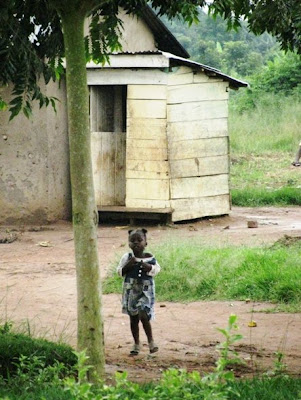


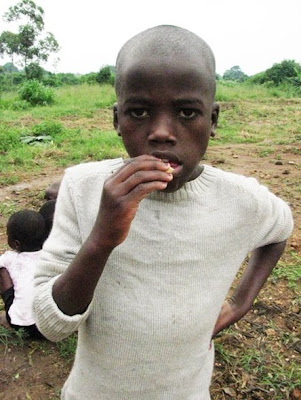

No. We don't go.
Sivuga bodaboda. Njagala okutambula buli lunaku. I don't ride bodaboda. I like to walk every day.
While I wish, every freaking day during my 45 minute walk to work and my 45 minute walk home, that I rode bodas, I can't. It's against Peace Corps policy for volunteers to ride motorcycles. Too dangerous (says Peace Corps). From what I understand, it's Peace Corps policy worldwide that volunteers are not allowed to ride bodas. In the past, like when our country director Ted Mooney served, volunteers were issued their own motorcycles, but no longer. Too many volunteer deaths lead to a worldwide ban on motorcycles. So I walk. A lot. Everywhere.
The boda drivers in town have certainly noticed. While they've slowly started to realize that I don't take bodas, they now pester me about my "fear" of them.
"Why do you fear them?"
"You don't know how to ride boda?"
*sigh*
The other day my co-workers went out for lunch because the girl who cooks didn't come to work that day. As we walked past the group of boda guys my supervisor overheard them talking.
Supervisor: *laughing*
Me: What?
Supervisor: The boda drivers. Did you hear what they said?
Me: No. What'd they say?
Supervisor: They said you've launched a war against them. They're trying to figure out what they did.
Me: Oh.
So apparently I'm At War. Never knew.
I'm determined to be nicer to the boda guys from now on, even though they make me so very angry during each encounter. The harassment female volunteers get from boda guys is intense. Kissy-kissy noises, whistles, "hey sexy momma," yelling at me in a weirdly high-pitched voice "Muzungu we go?". There's no end to the harassment from boda guys every day. They find immense pleasure in making white girls uncomfortable. And they do it well.
I guess that's all on that subject for now.
I'm going to post some pictures from Christmas now. They're in Reverse Order because I uploaded them wrong. So you can start from the bottom and work your way up and it'll probably be more right, time-wise.
My Christmas was spent in a small town about 40k from me at an orphanage. There's a Peace Corps volunteer that works at the orphanage and school who invited anyone who wanted to to spend the holiday with the kiddos. It was a nice way to spend my first Christmas away from home. We made dinner the night before and a Christmas lunch of chicken, meat, rice, beans, spaghetti, irish potatoes, matooke, a bean/maize salad (really good), some type of slaw, and other stuff I've forgotten about.


Subscribe to:
Posts (Atom)